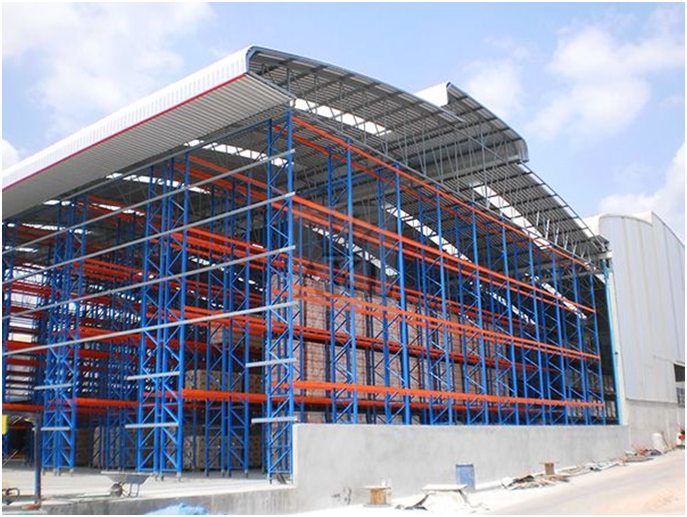
Industrial Racking Systems
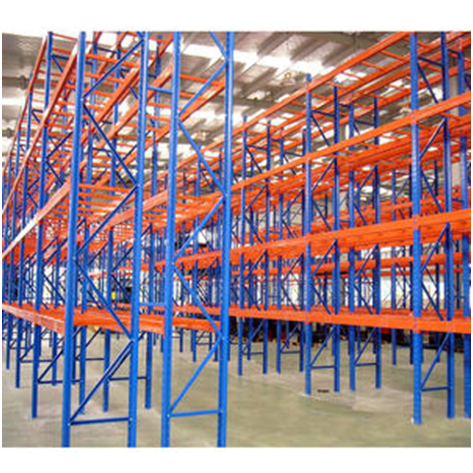
Heavy-duty selective pallet racking system
A heavy-duty selective pallet racking system is the most common warehouse storage solution, designed for high-capacity loads while providing direct access to every pallet. It’s versatile, adjustable, and ideal for warehouses with diverse inventory and frequent pallet movement
- A storage system using upright frames and horizontal beams to hold pallets.
- Each pallet can be accessed directly without moving others.
- Built to handle large weights (1000kg – 3000kgper level) and tall structures (more than 10m)
- Beam levels can be adjusted to fit different pallet sizes.
- Suitable for both light and heavy loads, compatible with all standard forklifts.
- Easy to expand as warehouse needs grow.
- Made from reinforced steel, powder-coated for long-term use.
- Suitable for Distribution centers, Manufacturing plants, Retail warehouses, Cold storage facilities
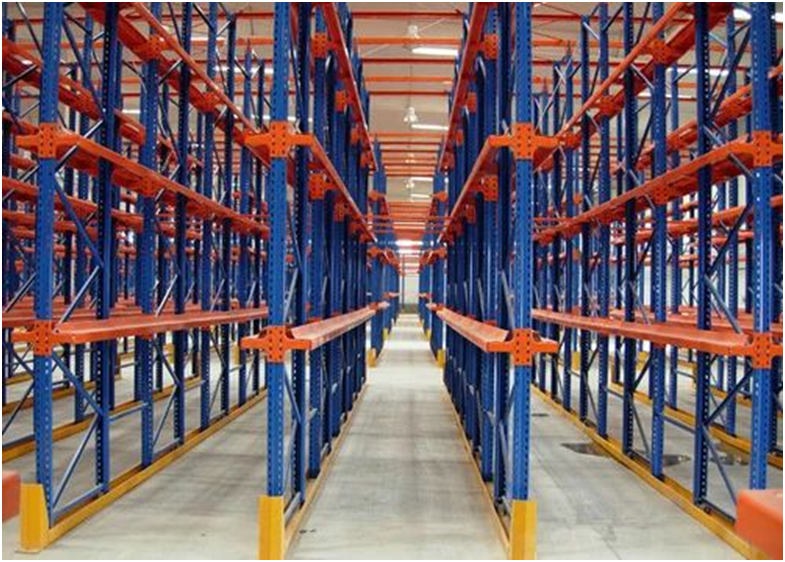
Drive In Racking System
A drive-in pallet racking system is a high-density warehouse storage solution where forklifts drive directly into storage lanes to load or retrieve pallets. It’s ideal for storing large volumes of homogeneous products, maximizing space efficiency, and supporting LIFO (Last-In, First-Out) or FIFO (First-In, First-Out) inventory rotation depending on configuration
- A storage-by-accumulation system where pallets are stored multiple units deep in lanes, with forklifts entering the structure to place or retrieve loads.
- Consists of rails or ledges inside lanes that support pallets, eliminating the need for multiple aisles.
- Operation modes: Drive-In (LIFO) and Drive-Through (FIFO).
- Increases warehouse capacity by up to 60% compared to selective racks.
- Reduces aisle requirements, making it perfect for limited warehouse footprints.
- Simpler and more affordable than other automated high-density systems.
- Suitable for cold storage, food distribution, beverages, and bulk durable goods.
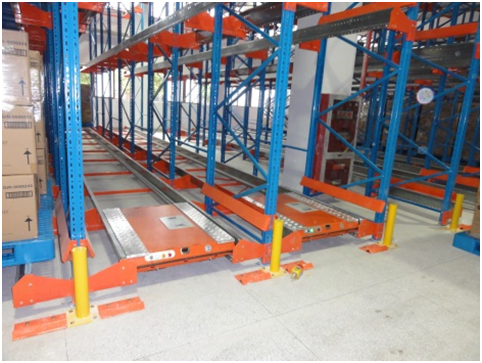
shuttle pallet racking system
A shuttle pallet racking system is a semi-automated, high-density warehouse storage solution that uses a motorized shuttle to move pallets within deep racking channels. It increases storage capacity, reduces forklift traffic, and supports FIFO or LIFO inventory management
- A semi-automated storage system where a motor-driven shuttle runs on rails inside racking channels to load/unload pallets.
- Forklifts place the shuttle at the channel entrance, and operators control it via remote or tablet. The shuttle then transports pallets inside the lane.
- Maximizes warehouse space by using deep-lane racking.
- Can operate as First-In, First-Out (ideal for perishable goods) or Last-In, First-Out (for non-perishables).
- Reduces forklift traffic inside aisles, lowering accident risk.
- Faster and efficient pallet handling compared to drive-in racking.
- Works well in cold storage, food & beverage, pharmaceuticals, and automotive industries.
Light duty shelving racks
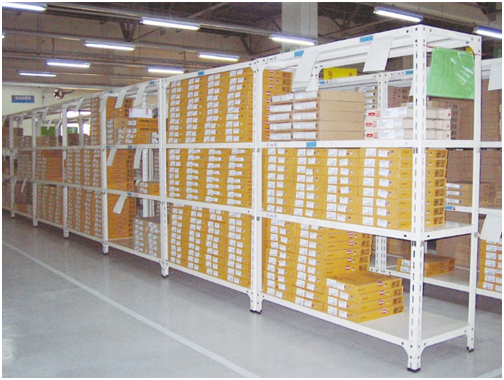
Light duty shelving racks are versatile storage systems designed for small to medium loads, ideal for offices, workshops, warehouses, and even home use. They are durable, easy to assemble, and often boltless for flexibility in adjusting shelf heights
- Storage racks built for lighter loads such as boxes, documents, tools, or small parts.
- Typically supports weights ranging from 50–250 kg per shelf, depending on design.
- Perfect for e-commerce order picking, product display, archiving, and household storage.
- Many models use industrial locking systems instead of nuts & bolts and are easy to set up.
- Powder-coated steel provides corrosion resistance and durability for long-term use.
- Flexible configurations allow shelves to be adjusted to fit different item sizes.
- Saves space while maximizing storage efficiency.
- Suitable for supermarkets and retail stores, warehouses and logistics centers, industrial and commercial storage, and backroom inventory management.
Rack Supported Mezzanines
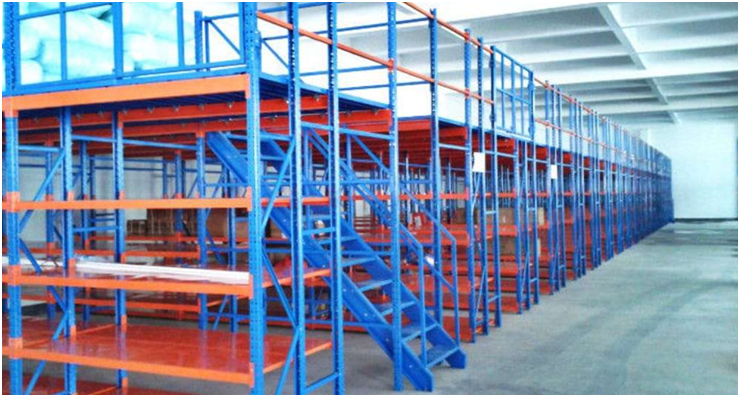
Rack-supported mezzanines are storage platforms built directly on pallet racks, allowing warehouses to maximize vertical space without expanding their footprint. They are cost-effective, flexible, and ideal for facilities needing both shelving and elevated work areas.
- A mezzanine floor constructed on top of pallet racks, using the rack uprights as structural support.
- Expands usable storage and workspace by utilizing overhead space.
- Provides storage below and above the mezzanine platform.
- Can be part of a pick module system, combining shelving, conveyors, and flow racks.
- Supports different storage methods—pallet flow, carton flow, or hand-stacked beams.
- Builds upward instead of outward, saving valuable floor area.
- Less expensive than constructing a free-standing structural mezzanine.
Rack Supported Buildings
Rack-supported buildings are warehouses where the storage racks themselves form the main structural framework of the facility, supporting the roof and walls. Instead of building a warehouse first and then installing racks, the racks are the building. This design maximizes storage capacity, reduces construction costs, and is often used in high-density, automated storaget
- A rack-supported building integrates the racking system directly into the structure. The racks serve as the primary support for the roof and walls.
- In conventional warehouses, racks are added after construction. In rack-supported buildings, racks are the skeleton of the building.
- Commonly used in logistics, manufacturing, and distribution centers where high-density storage and automation are critical.
- The racks eliminate the need for pillars or columns, as they carry the load of the building.
- The racking system is erected first, then cladding, roofing, and walls are attached to the racks.
- Often paired with Automated Storage and Retrieval Systems (AS/RS) for maximum efficiency.
- Maximizes vertical and horizontal storage capacity.
- Lower construction costs since racks double as the building frame.
- Faster construction compared to traditional warehouses.
- Can be adapted for different pallet rack types and automation systems.
- Optimizes land use by minimizing wasted space.